
Why Am I the Only One Working? Writing by Author Ian Reilly
Ever offered to help someone but found yourself doing all the work?
Or wondered why you should help people who won’t help themselves?
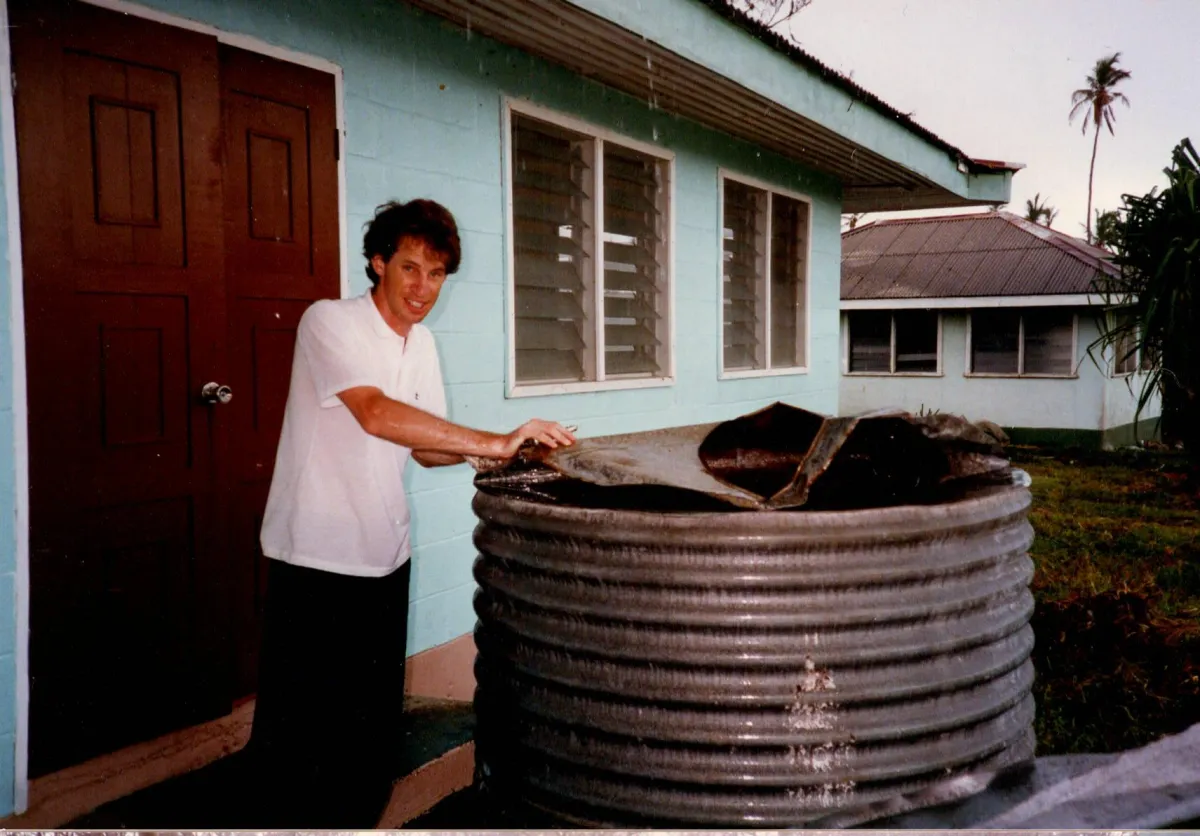
In Samoa, we often prepared lessons by candlelight working late into the night, while our school Principal struggled to get teachers to come to work. Sometimes they arrived drunk or slept in the library instead of teaching in the classroom. Initially, I couldn’t understand this and wondered why these people were so lazy? Why don’t they want to better themselves or their community?
Since it’s a very common experience for people engaged at the coalface of cross-cultural work, here are some tips that might help.
First, consider the bigger picture.
You’re there to help but they’re there to live
While you’re absent from your culture and home, it’s easy to devote your every waking moment to your work – the reason you’re there. You don’t have the same commitments, complicated relationships and responsibilities as your local co-workers. There is no such thing as a simple community, because they all have complex political, social and economic struggles and conflicts. These impact how your co-workers navigate relationships, responsibilities and obligations you may know nothing about. And while you might think two or five years is a long time, that’s a bump in the road for your co-workers who live in their community for the term of their natural life.
You chose this, but they didn’t
Also, remember that people who volunteer or work at the coalface of international aid are a self-selected minority. In 1990, how many Australians were willing to do what we did – leave home, jobs and security to risk life and limb living in a poor country, experience culture shock and work on a local salary? It’s unfair to compare highly motivated people like yourself to ordinary locals struggling through life, trying to live within their means, raise their kids and make the best of life along the way. Volunteers, aid workers and expats might want to change the world, but the people they serve just want to survive.
Similarly, people who committed to living long term in Samoa focused on really important matters like their health. Taking things easy can mean survival, not sloth. You’re no use to anyone working yourself into the ground and being medevac’d home on a stretcher. Becoming ill makes you a burden and a hindrance, not a help.
They may not want your help
The people you work alongside probably didn’t ask for you and may even resent your presence. You may be the overseas expert brought in by people higher up the food chain, and possibly an unwitting football in a political game you know nothing about. Your presence may make them feel disenfranchised and possibly make them look bad in their own community, causing them work actively against you.
It’s hopelessly naïve to think that you’re only there to help out. Your purpose might be to give credit to someone, or be a scapegoat, depending on whether your work goes well or poorly. It was the same when I worked as an international consultant in high-tech innovation in the world’s most advanced economies. I always had to ask, “who is my real client” and, “what is my real objective” when starting any assignment. I once discovered my “real objective” was to save someone’s marriage by enabling them spend more time at home with their family.
Their aspirations may be low
While in a foreign country it’s easy to compare everything to what you know from your home country, or elsewhere in the world. But the people in your host culture may only know the immediate world around them, and have no idea of what could be, or why they should aspire to it.
There are lazy and hardworking people in every community, so maybe some people just can’t give a toss. There were lazy teachers at my high school, and as I describe in my memoir Encounter, I had a slothful and alcoholic primary school teacher whose fondness for the bottle severely retarded my early education. Don’t fall into the trap of judging the whole tree by a few bad apples.
What you can do
Immerse yourself into your new host culture. Learn to live like they do and spend time with them and their families. That will help you understand the communal or family political and cultural pressures they face daily, enhancing your understanding of people’s hopes, fears and dreams. It may take years to learn these cues, so play the long game of relationship investment without expecting short term gains.
Watch how other locals lead and motivate people. That will give you cultural clues into practices that work in that culture, including those you might find uncomfortable but are effective.
Finding out how our Samoan Principal spent a lot of effort “managing up” gave us insight into the political landscape he had to negotiate. Watching him lead and motivate taught me how to do that, not only in Samoa, but in Australia and other countries. I learned how to involve people in decision making, give them a voice, a stake in the outcome, and gain their ownership of any task.
So, as frustrating as it may be, use your experience to learn new people skills and gain important insight into human nature. Those skills proved invaluable when I later led teams to solve impossible problems at home and elsewhere in the world.